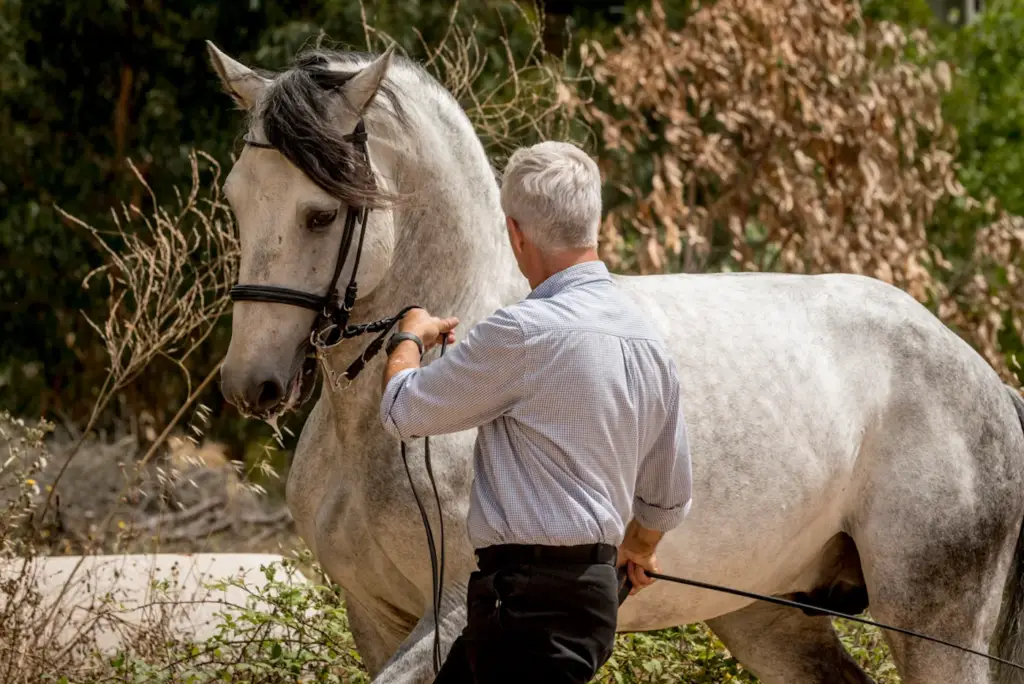
The Classical Art of Working Horses In Hand
Why Work In Hand?
For centuries, working in hand has been an integral part of classical horsemanship. Long before a horse is asked to carry a rider, he can begin to learn balance, coordination, suppleness, and communication from the ground.
At Lusitano Heritage, we view work in hand not simply as a training technique, but as a conversation between horse and human. It develops awareness, patience, sensitivity, and understanding while allowing the horse to strengthen both body and mind without the weight of a rider.
Work in hand can be used throughout a horse’s life. For young horses, it provides an excellent introduction to lateral work, helping them learn to move their bodies correctly and develop an understanding of the aids before they are transferred to ridden work. For more experienced horses, it offers a valuable way to improve suppleness, balance, collection, and self-carriage.
Many riders also use work in hand as part of their daily routine. It can serve as a gentle strengthening warm-up before riding, allowing stiffness and tension to be identified and addressed before mounting. Equally, it can be used after ridden work to encourage stretching, relaxation, and recovery.
When advised by a qualified professional, work in hand may also play a supportive role during rehabilitation and recovery. Gentle exercises on straight lines, circles, and lateral movements can help improve flexibility, encourage correct muscle development, and assist the horse in regaining confidence in movement.
Perhaps most importantly, work in hand allows us to slow down. Standing beside the horse, observing each step and each response, we begin to develop a deeper understanding of how the horse thinks, feels, and moves. In doing so, we often become better horsemen and horsewomen ourselves.
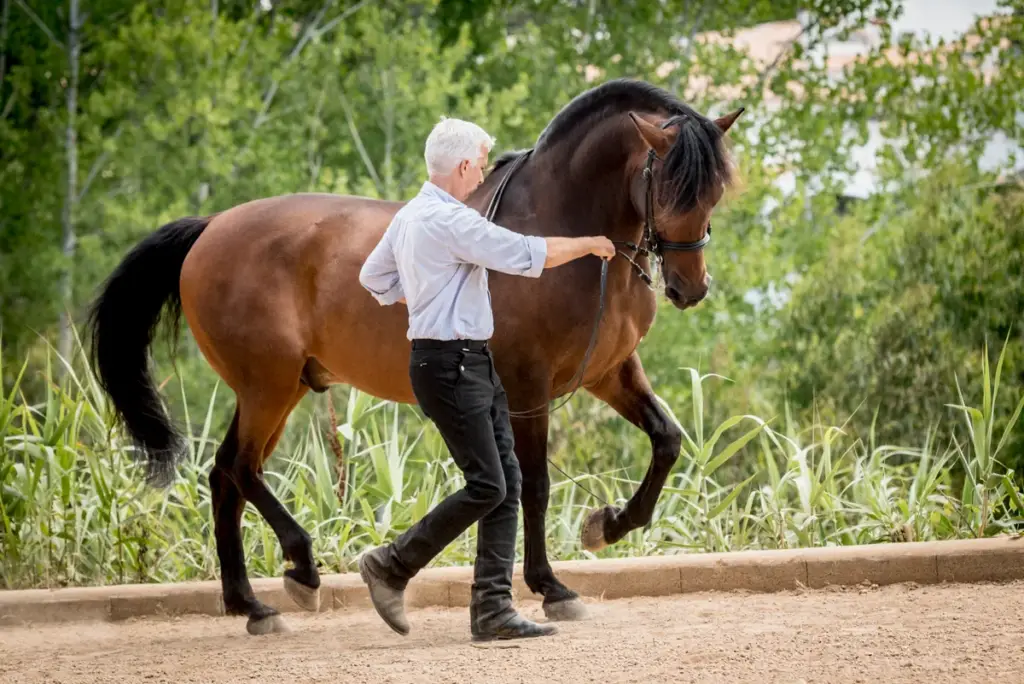
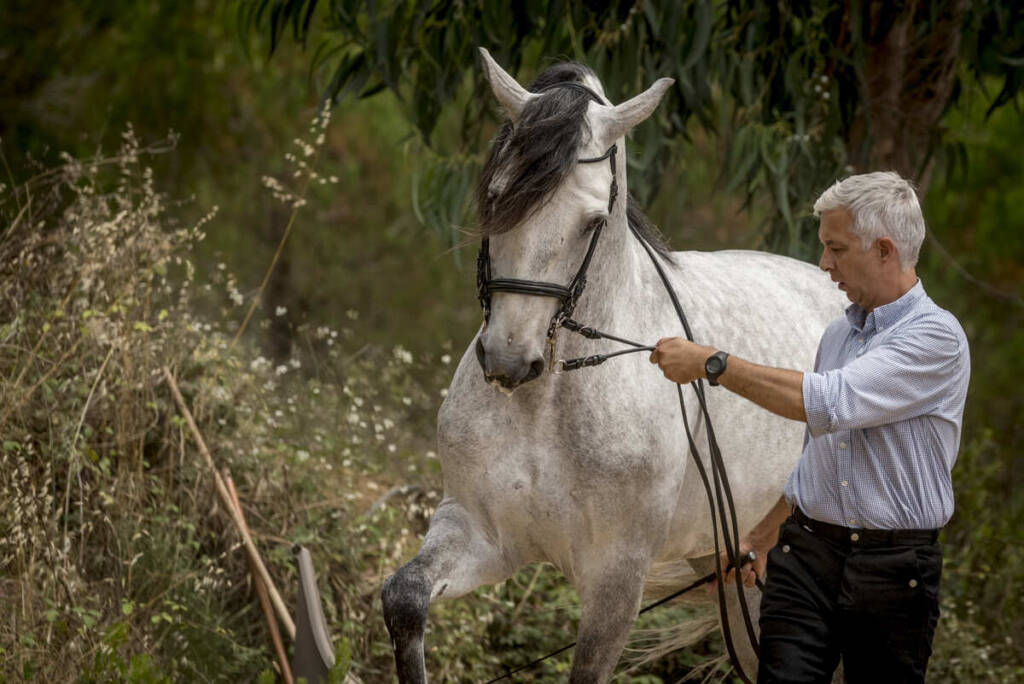
Perhaps most importantly, work in hand allows us to slow down. Standing beside the horse, observing each step and each response, we begin to develop a deeper understanding of how the horse thinks, feels, and moves. In doing so, we often become better horsemen and horsewomen ourselves.
” I believe from the moment you pick up the horse from the paddock or stable to go to the grooming area, that is where the partnership begins. Not only when riding”
The Stages
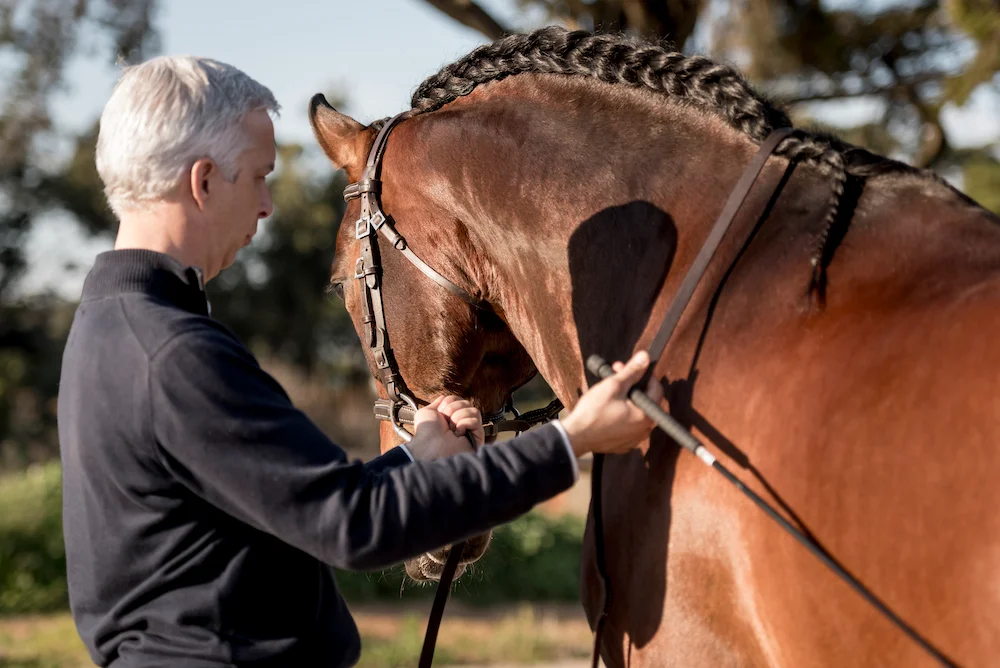
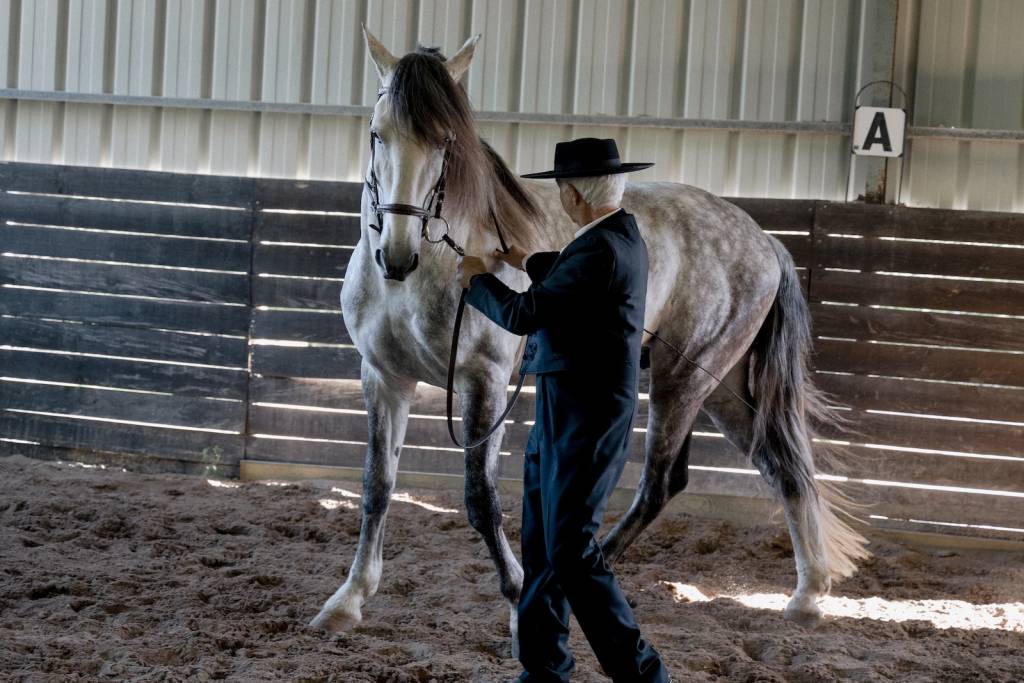
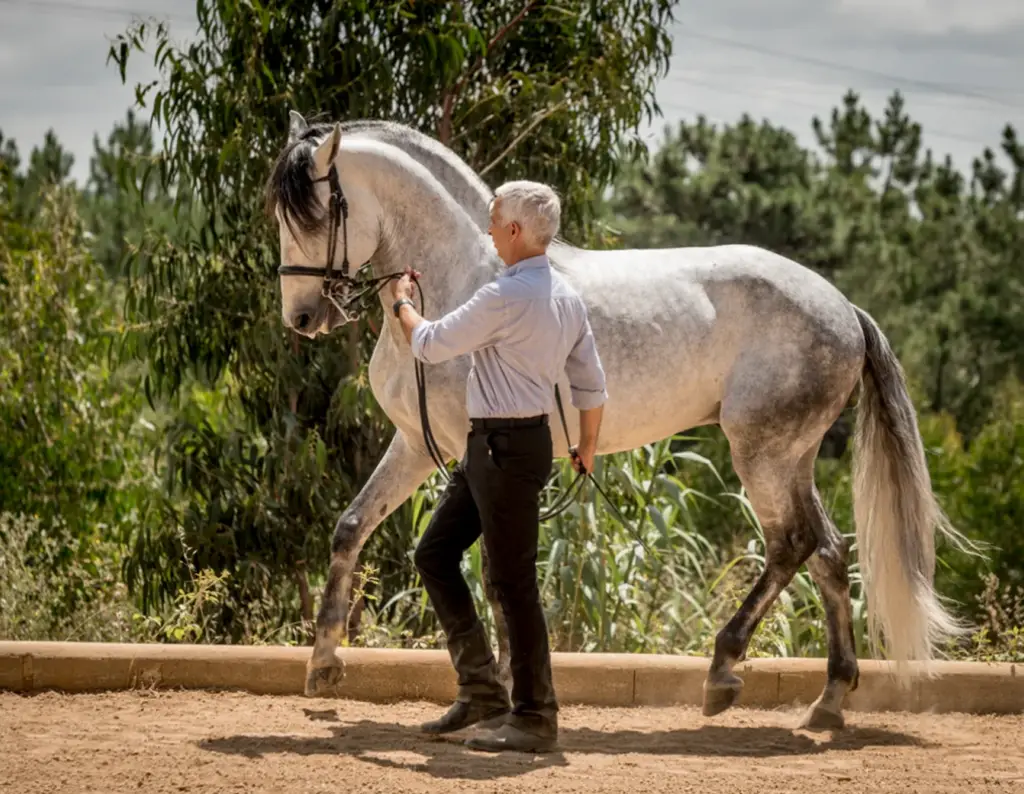
Foundation
The beginning of all work in hand. Through correct position, rhythm, straightness and communication, horse and handler learn to move together in balance and understanding.
Lateral Work
Exercises such as shoulder-in, leg yield and travers help develop suppleness, coordination and engagement while teaching the horse to respond lightly to the aids.
Collection
Through progressive gymnastic exercises, the horse learns to carry more weight behind, becoming lighter in the forehand and stronger through the body.
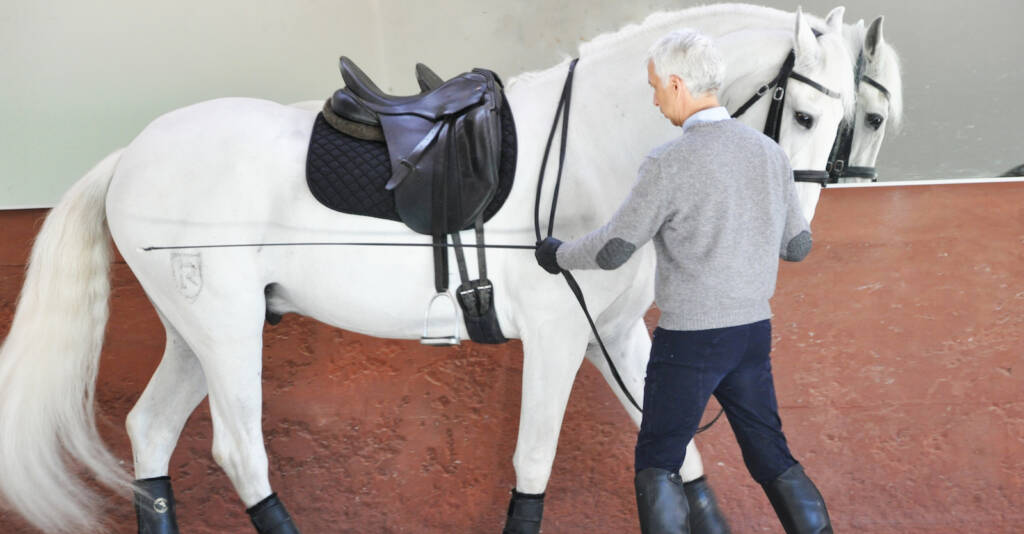
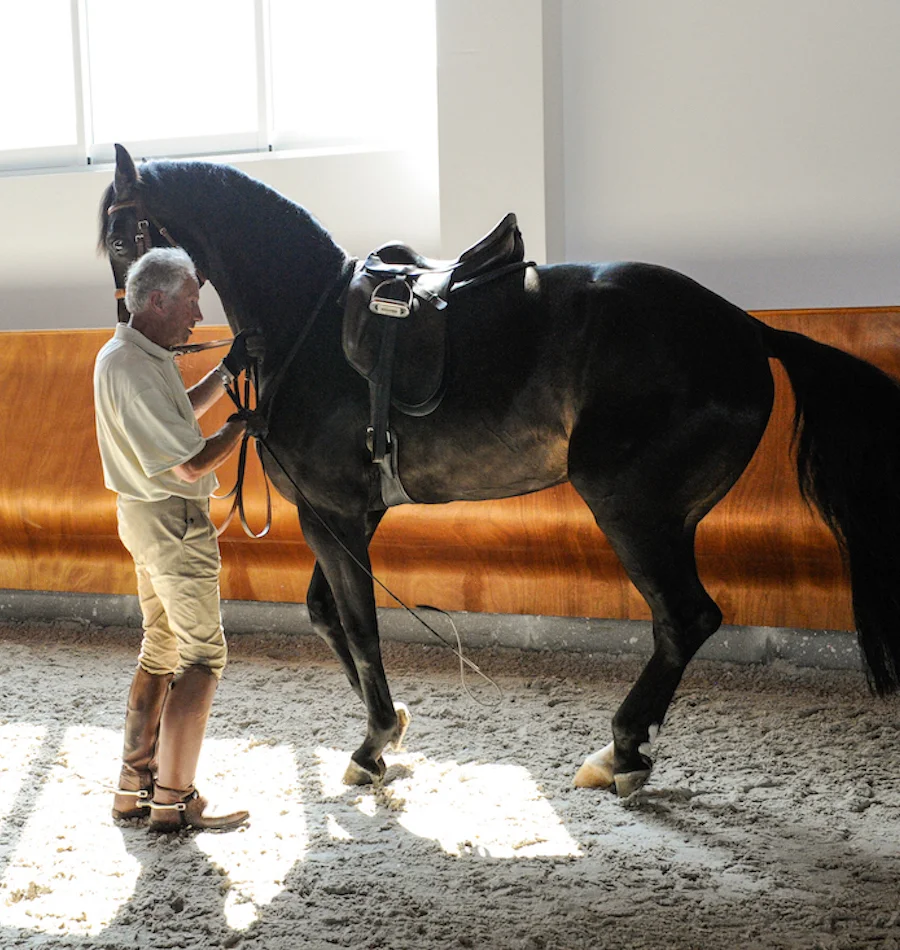
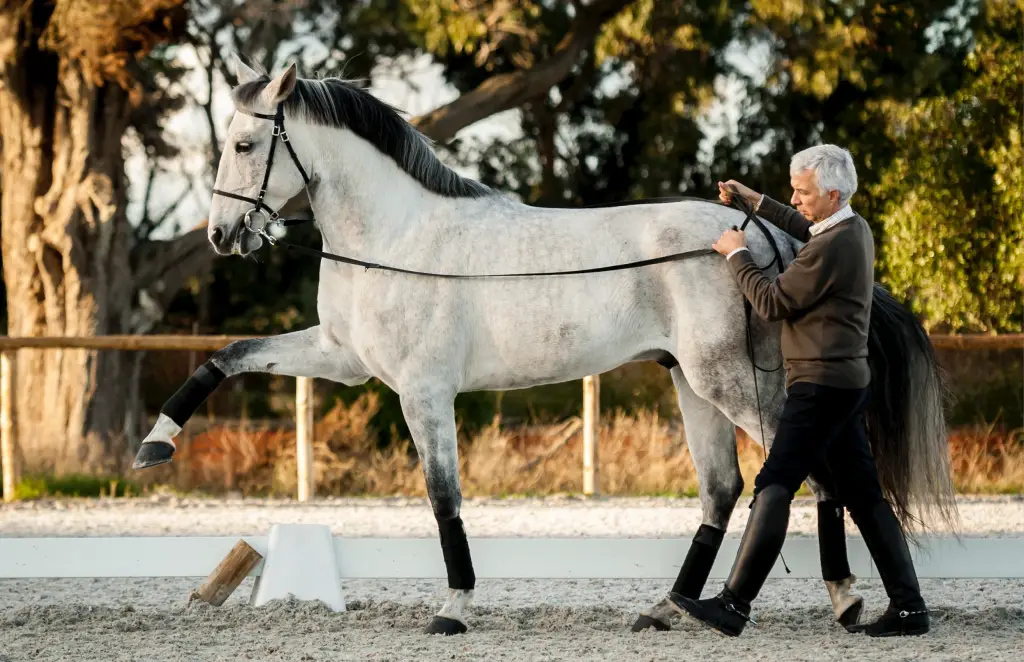
Rein Back
One of the most valuable classical exercises for improving balance, engagement, straightness and responsiveness.
Developing coordination, self-carriage and greater control of the shoulders and hindquarters through careful, progressive training.
Advanced Collection
Piaffe, passage and pirouettes represent the highest expressions of collection
Long Reins
A fascinating bridge between groundwork and riding, helping the horse develop confidence, balance and understanding from a different perspective.
The Purpose of It All….. From Ground to Saddle
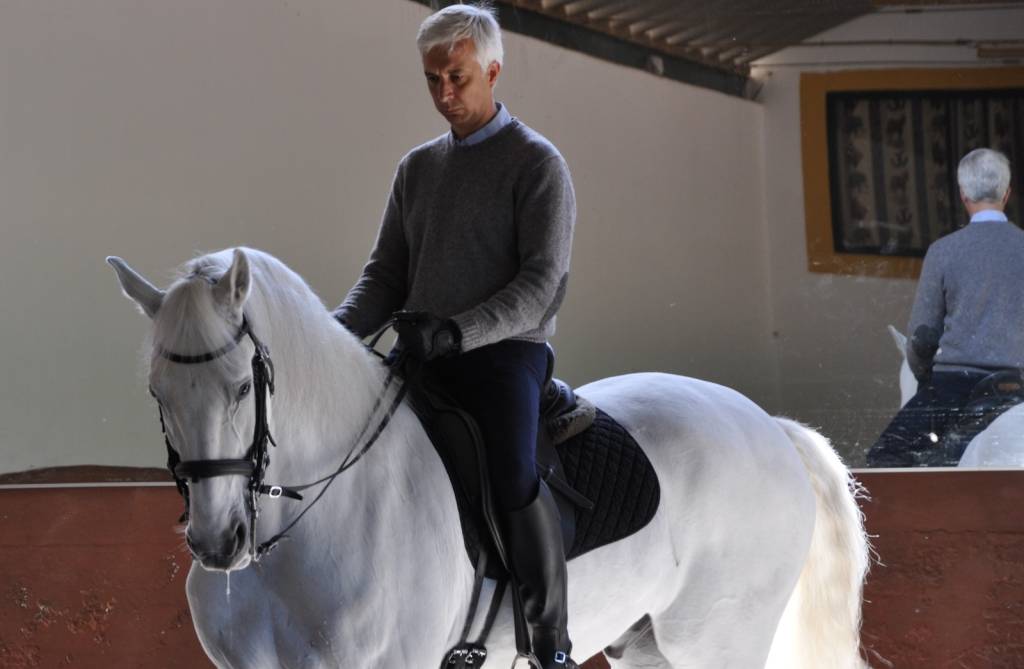
The lessons learned in hand naturally transfer to ridden work, creating a lighter, more responsive and better-balanced horse.
“Training should never be confirmed to an arena, your horse will love work from the ground and to go out to exoerience new things. This all develops trust and confidence for a great lifelong connection”
Experience the Classical Art of Working In Hand
Reading about classical training is one thing. Experiencing it alongside an accomplished trainer and a willing horse is something entirely different.
Join Nuno Cavaco in Portugal for our Classical In Hand & Ridden Retreats, where students learn how groundwork and riding work together to develop suppleness, balance, collection and harmony.
Whether you are new to work in hand or looking to refine your understanding of classical training, the retreat offers a unique opportunity to study these principles within the rich tradition of Portuguese horsemanship.
A Forthcoming Book
The Classical Art of Working In Hand
Currently in development By Nuno Cavaco & Teresa Burton
Drawing on decades of experience, this forthcoming book explores the principles, exercises and philosophy of classical work in hand, from the first steps beside the horse through to collection, piaffe, passage, pirouettes and long reins.
Join our mailing list to be notified when the book is released.