Portuguese Heritage, Lived
Portugal’s heritage does not live only in palaces, monuments and museums. It can still be found in its villages — in music and dancing, in feast days and fairs, in skills passed quietly between generations, and in the clothes once worn for work, celebration and Sunday best.
During our recent Lusitano Heritage photographic project in Elvas, we wanted to explore another side of Portuguese heritage alongside the country’s great equestrian traditions: the folk costumes of its villages.
The costumes we had hoped to photograph in Elvas were unavailable — they were being used for local celebrations. There was something rather wonderful about that. These were not clothes waiting in a museum cabinet to be photographed. They remained part of a living tradition.
So we came home.


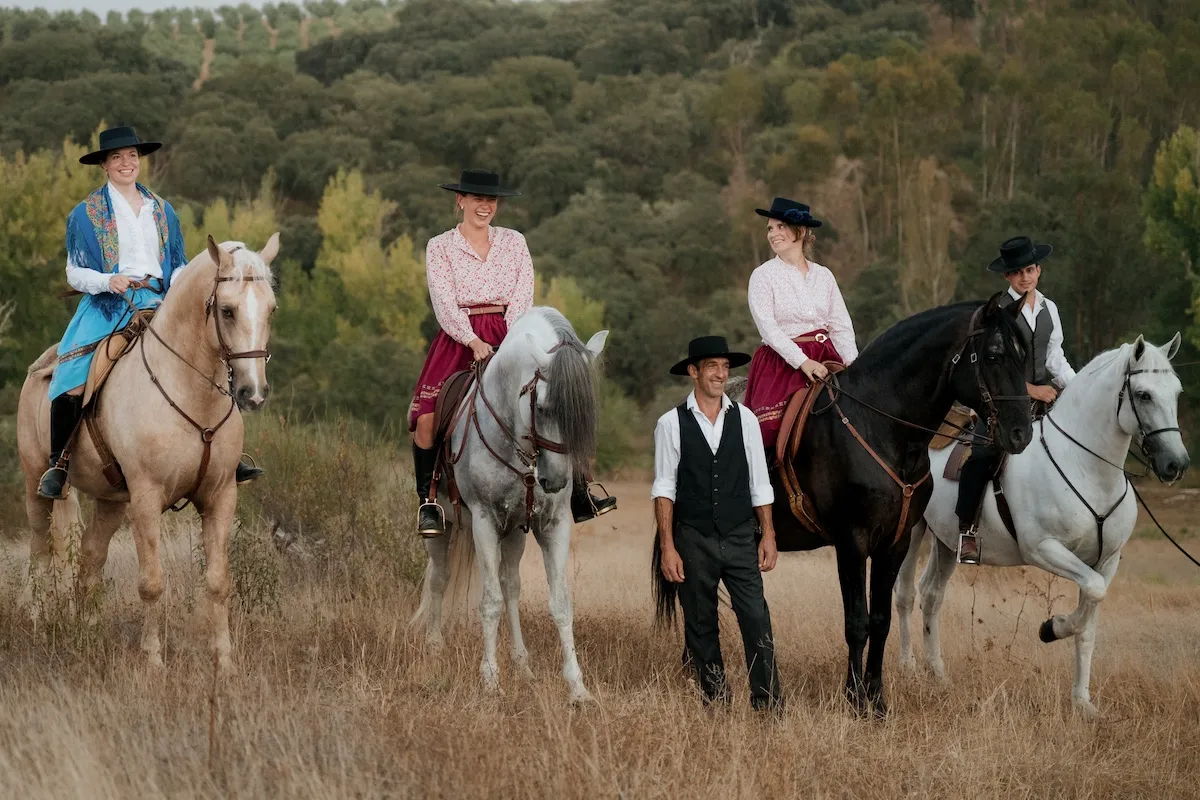
The costumes in these photographs were kindly provided by the Cultural Group of Folk Dances and Songs of São Miguel de Alcainça(GCDCSMA), close to our own local village in the municipality of Mafra, and belong to the cultural world of the região saloia, the historic rural communities surrounding Lisbon.
There was never simply one immutable “Saloio costume”. Dress reflected people’s lives: their work, their means, the occasion and the period in which they lived. Surviving collections from the Mafra region include working clothes and festive and Sunday dress, alongside shawls, scarves, hats, bags and other pieces that tell us something about the people who wore them.
Much of the clothing preserved and recreated by the region’s folklore groups recalls rural life of the late nineteenth and early twentieth centuries. In Malveira, that heritage survives not only through clothing but through traditional music and dances including the Bailarico Saloio, Verde-gaio and Namorico Saloio.
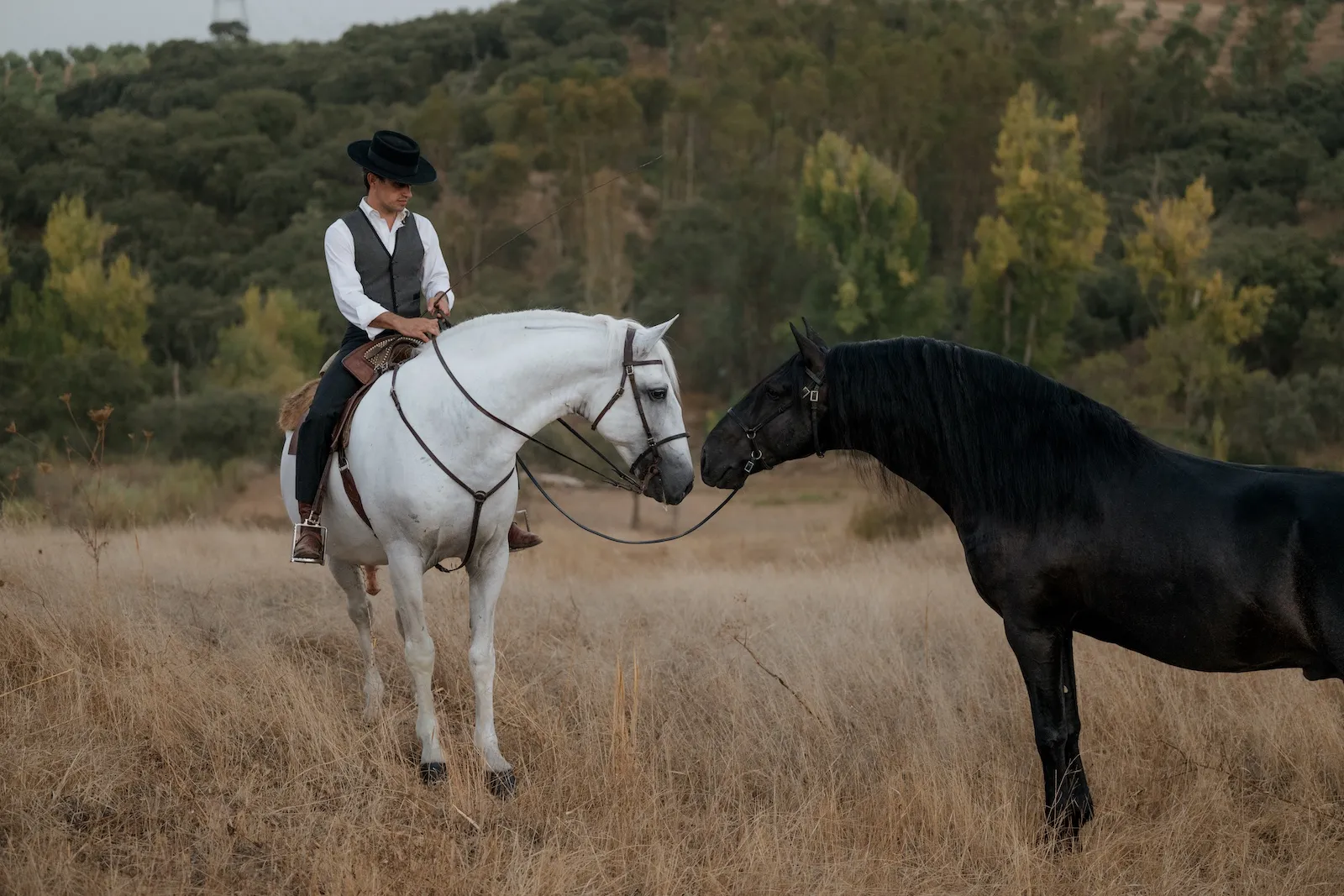
We took the costumes back into the landscape, photographing them with Lusitano horses on the land of Coudelaria Fortunna.
And something began.
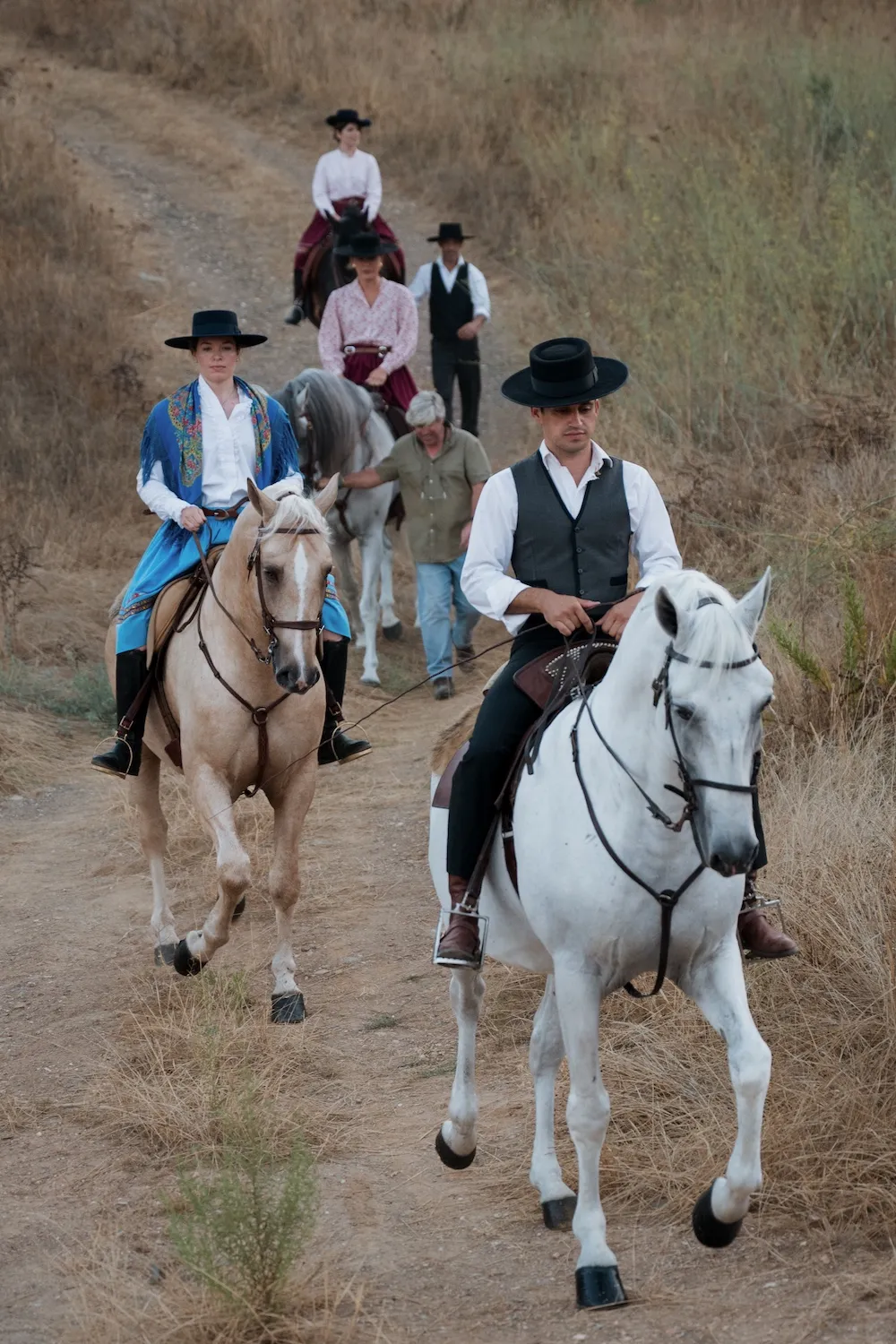
These photographs are not intended to recreate a precise historical scene. Rather, they are a celebration — of horse, landscape, clothing and the visual language of rural Portugal.
We would like this to become part of a much wider Lusitano Heritage project.
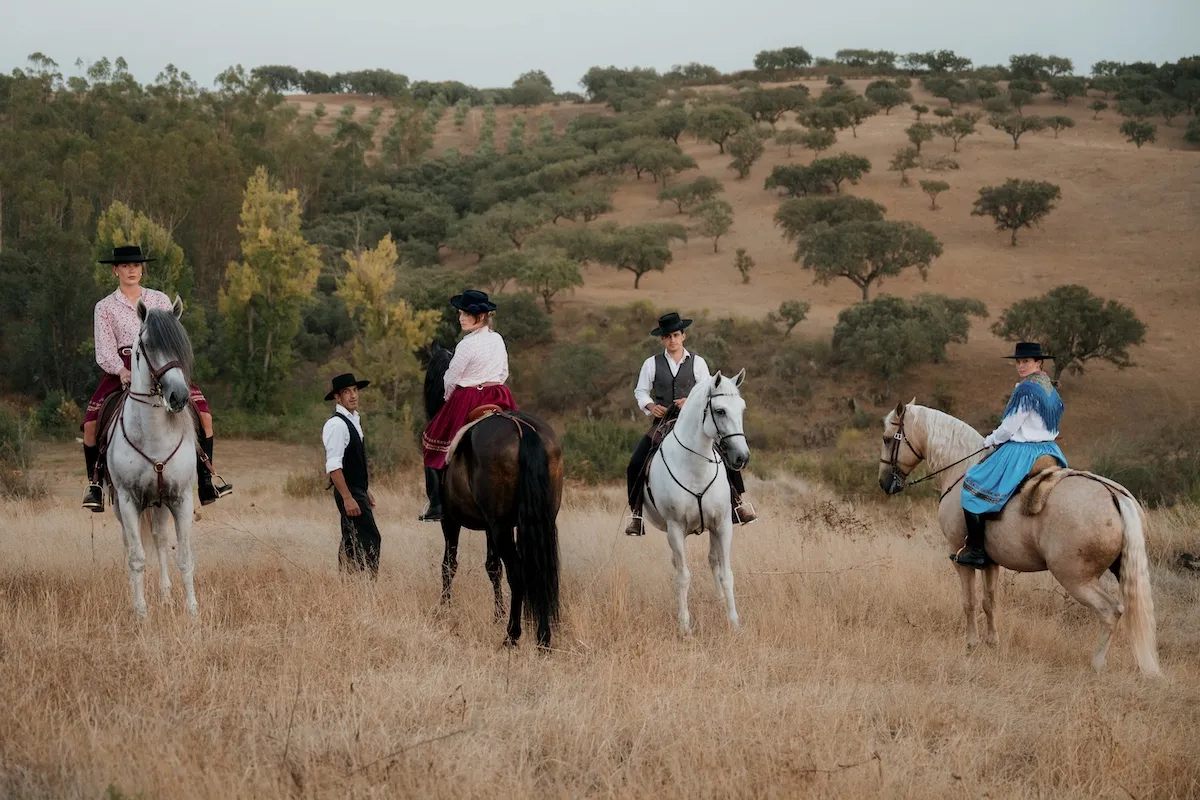
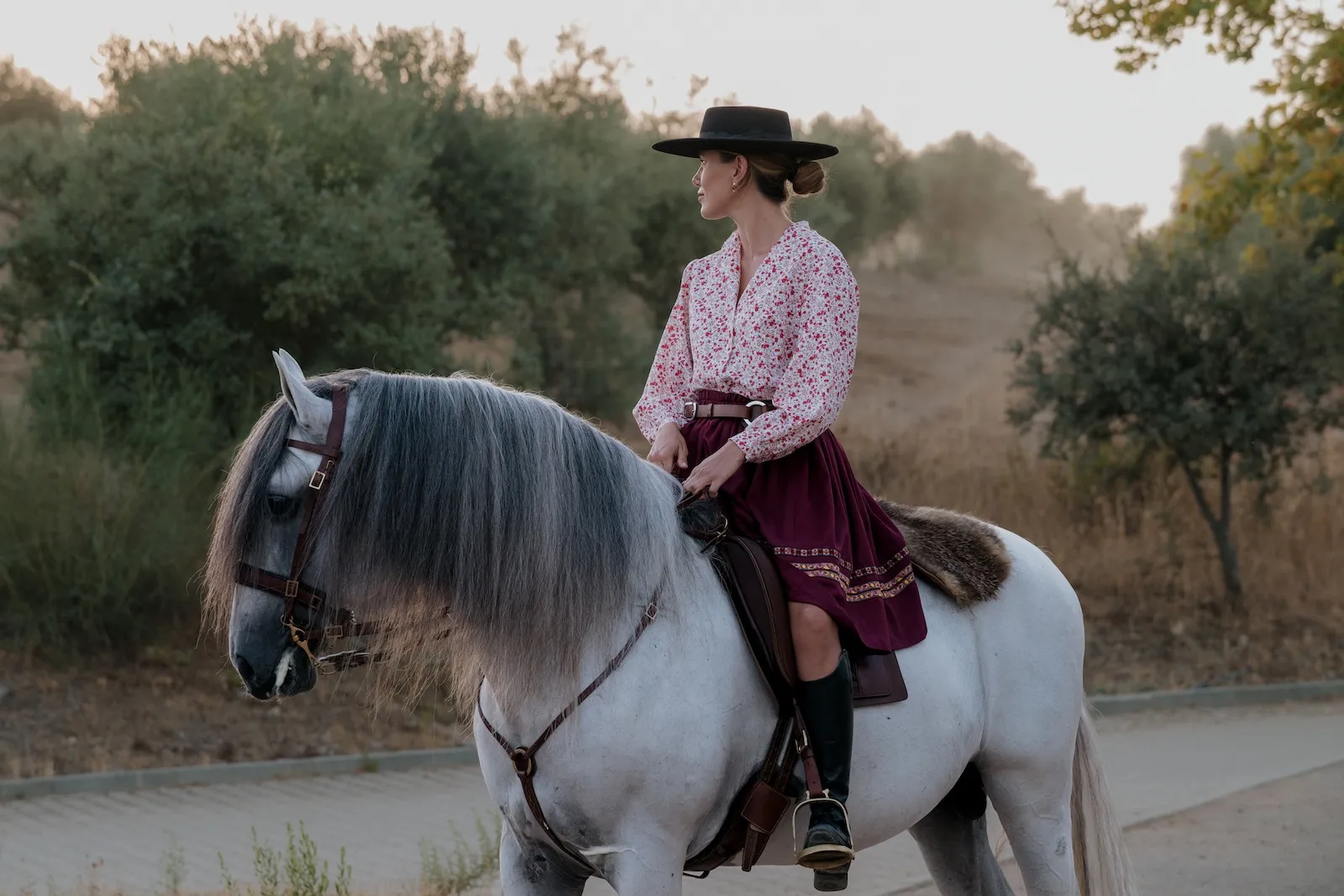
Across Portugal, regional dress, horsemanship, agriculture, craftsmanship, music and celebration have developed distinctive identities. We want to travel further, meeting the people who preserve these traditions and documenting them in the landscapes from which they came.
And perhaps preservation need not mean keeping something unchanged.
In time, we would also like to explore how elements of this extraordinary textile heritage might inspire contemporary pieces made with Portuguese craftspeople — perhaps a detail on a saddle cloth, the shape or embroidery of a bag, a scarf, a beautifully cut piece of clothing.
Not reproductions of traditional costume, but something new that acknowledges where it came from.
Because heritage is at its most powerful when it is not simply remembered.
It is lived.
In love with these belts? Acquire your own Sílvia Teixeira belt in our online store.
Text by Teresa Burton
Photos by Lena Saugen Photography
Horses by Coudelaria Fortunna
Models are Anna-Lena Burgin, Dani Rodrigues Soares, Liz Scott, Miguel
Costumes provided by Cultural Group of Folk Dances and Songs of São Miguel de Alcainça(GCDCSMA)
Belts by Sílvia Teixeira

